A common phrase in recent conversations has been "the third place" a sanctuary outside work and home (or a lack thereof) in our city lives. A recent weekend-afternoon naptime spent in meandering thoughts took me back to a familiar place. A place introduced to me at childhood. A place that's been a third place for generations in my family without being labelled so.
Kalna Gate is a humble railway crossing. Not as well known outside the equally humble town of Barddhaman in Bengal. My close paternal family – brother, uncle and grand parents have all lived near this unmarked landmark, within earshot of the tracks, so I grew up in the rhythm of the crossing.
A third place is supposed to be a "social surroundings" spot, but Kalna Gate was more honest than that. Honest enough to make distant neighbors drift there after a tiring summer day. My late grand father was one of them. Sitting at their usual spot between two cold parallel steel tracks, he and his group would chat over warmer topics unknown to me. The passing trains ushered in the twilight.
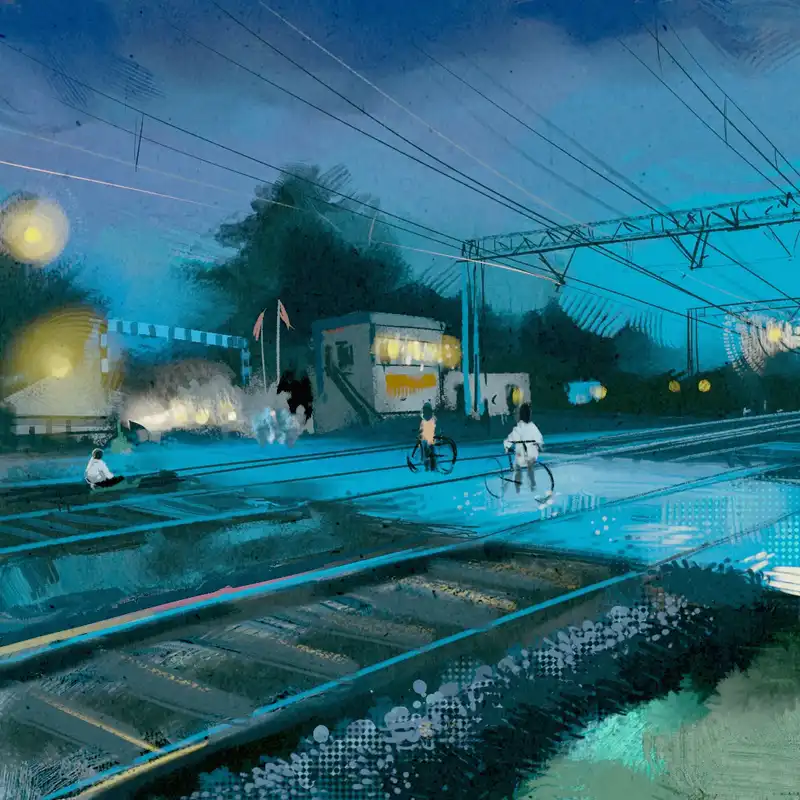
When I was a kid, that crossing was my world. I didn’t go there for the "community"; I went there because the earth shook—the tracks rattled in a familiar rhythmic tune. I’d sit on the cold and heavy iron fence with my father, watching the powerfully graceful locomotives tear past. I remember the frantic counting of coaches—always losing track—and the way the overhead wires would throw blue sparks into the purple dusk. It was noisy; between train horns, cycle rickshaw bells and vehicles beeping yet the conversations resonated louder. Sometimes my father and I would talk, but mostly we just sat in the breeze and be.
That gravity hasn't let go of me. Even after I got married, I had to take M there. I needed her to feel the air of that place. Recently, I painted it—the cover image—an impressionist piece from memory, all blurred lines and twilight colors. She recognized it instantly. Not because of the geography, but perhaps because she recognized the feeling.
Kalna Gate isn't "supposed" to be a third place; it's no fancy cafe, pub or even nor even a formal tea stall where one might expect the traditional Bengali adda. It’s just a gap in the fence, a vibration in the soil, a ton of honesty and the right mix of the mundane that just keeps calling me back.